Move Rehab from Conscious Control Back to Automatic Brilliance.
The 5 Principles of Motor Learning for Sports Rehab
Bridge the gap between perfect clinic mechanics and chaotic real-world performance. Learn how to integrate 5 research-backed motor learning principles into your sports rehab practice to drastically lower re-injury rates.
A short, focused course built specifically for sports rehabilitation practitioners in South Africa.
HPCSA accredited · 6 General CEUs, Level 1 · Full access · R499
Enroll in Conscious Control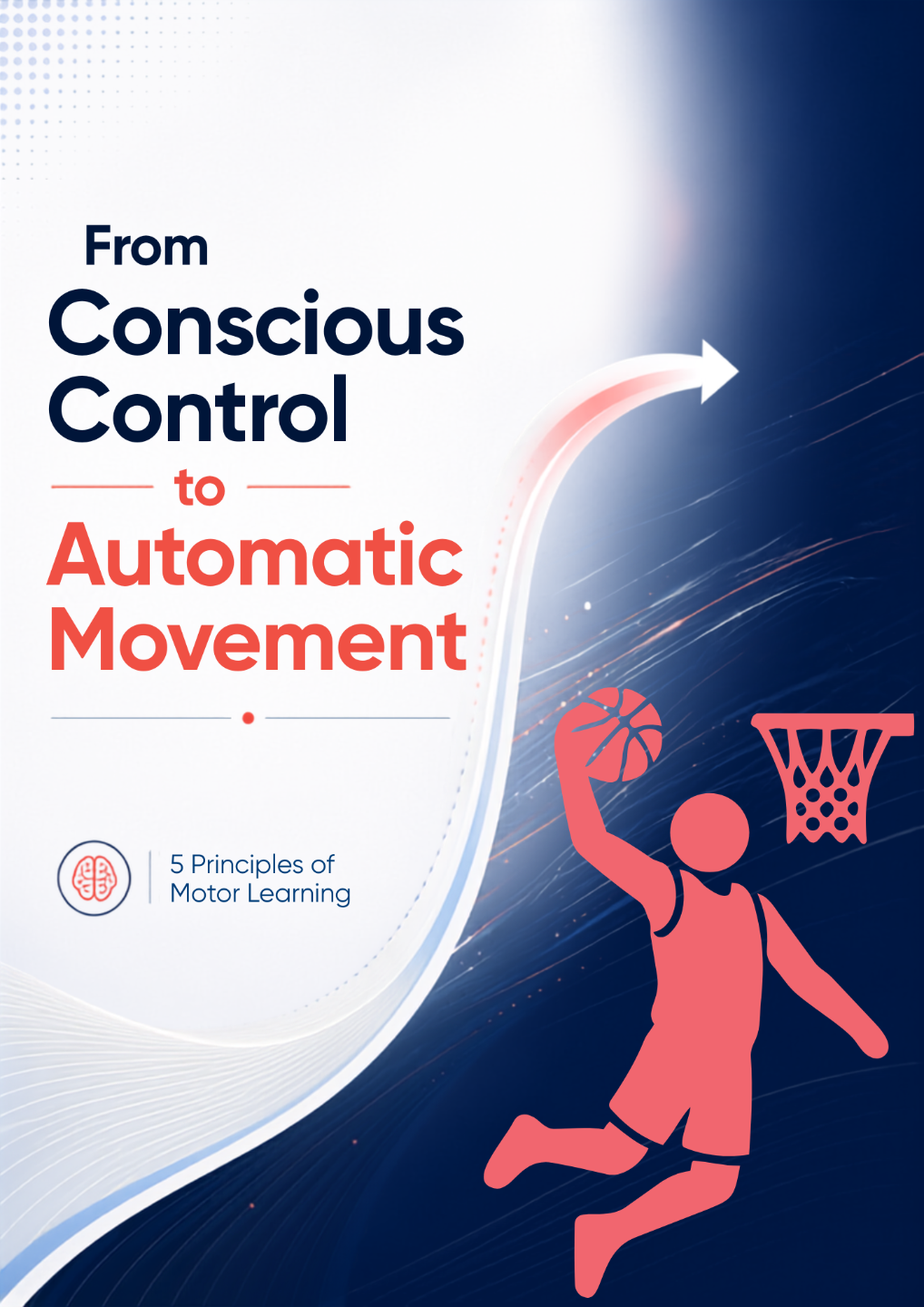
Traditional rehabilitation addresses tissue.
Neuroplastic rehabilitation also considers motor control.
Athletes can complete rehabilitation, meet return-to-play criteria, and still move differently under pressure, fatigue, distraction, and changing sport demands.
This course explores the clinical gap between successful tissue healing and robust, adaptable movement.
Using ACL rehabilitation as a practical lens, physiotherapist and researcher Amanda Hawke introduces strategies that can be applied across sports rehabilitation settings.
This course is for you if you are:
- A physiotherapist or biokineticist working with active patients and athletes
- Interested in applying neuroplasticity and motor-learning principles in practical ways
- Looking for fresh ideas beyond repetitive exercise prescription
- Working with return-to-sport rehabilitation, especially ACL and lower-limb injury
- Ready to examine some of the cueing and session-design habits that are easy to default to with your patients.
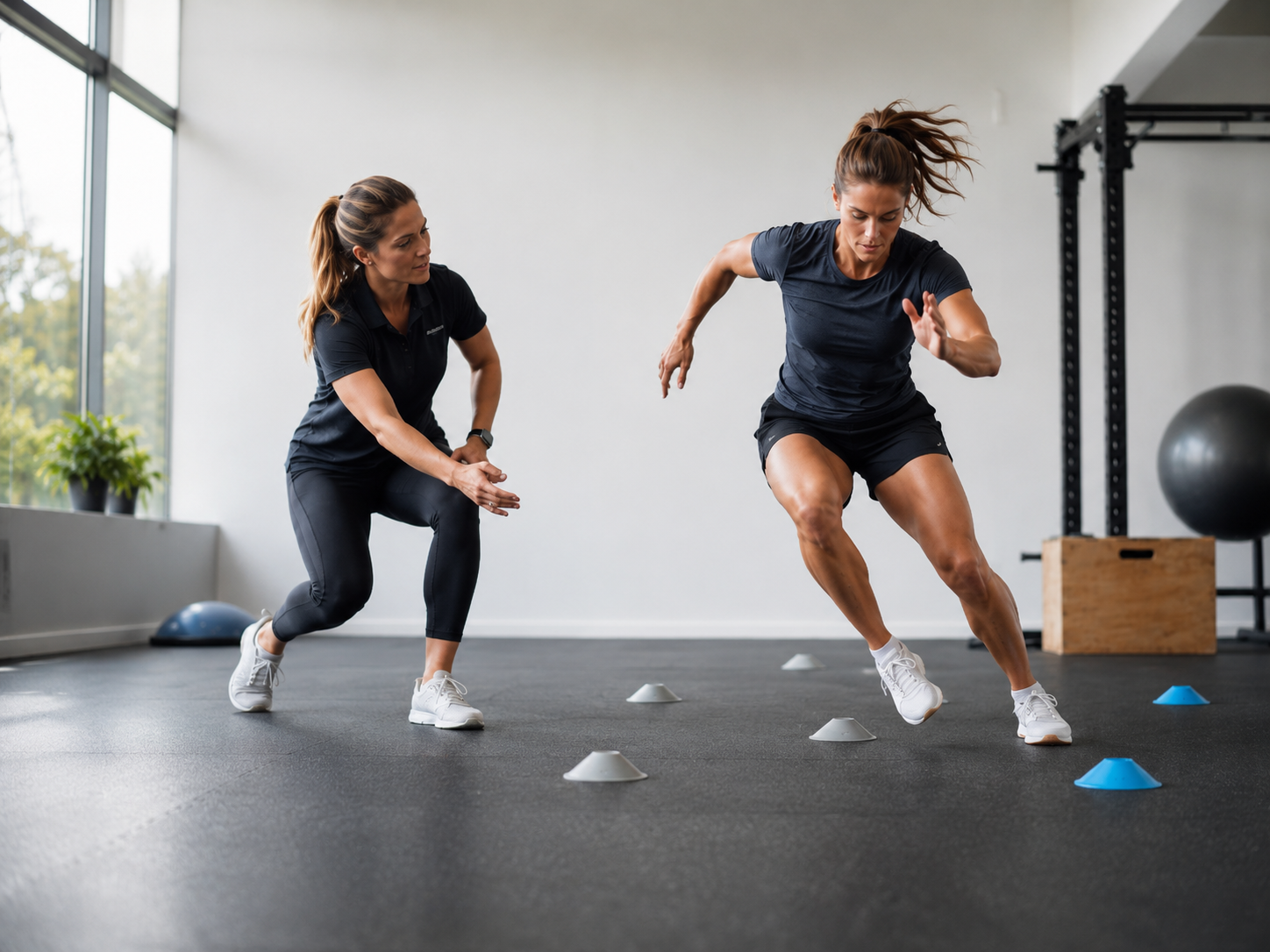
What You'll Get
Across six concise expert-led videos, you will explore five motor-learning principles that can help you rethink familiar rehabilitation tasks.
1. External focus of attention
Learn how small shifts in your language can direct attention away from body parts and toward movement outcomes in the environment.
2. Implicit learning
Use analogy, imagery, and metaphor to reduce overthinking and support more automatic movement control.
3. Differential learning
Move beyond repetitive sets and reps by introducing purposeful variation into rehabilitation tasks.
4. Contextual interference
Understand how task order and practice variability can influence retention and transfer beyond the clinic.
5. Self-controlled learning
Use choice, feedback, and positive reinforcement to increase engagement and support motor learning.
What makes this course practical
This is not a theory-heavy neuroscience lecture.
Amanda translates research into clinical decisions you can test in your next session:
- How you phrase instructions
- How you use external versus internal cues
- How you introduce movement variability
- How you structure practice order
- How you create more athlete agency within rehabilitation
You will leave with a clearer framework for designing rehabilitation that better reflects the variability, decision-making, and attentional demands of sport.
Meet Your Instructor
Amanda Hawke
Physiotherapist and researcher
Amanda brings together more than a decade of clinical physiotherapy experience with focused research into neuroplasticity and motor learning in musculoskeletal rehabilitation.
Her teaching is grounded in a simple clinical question: how can we help athletes rebuild movement control that is not only effective in rehabilitation, but resilient in sport?
Through Stride Medical, Amanda now mentors the next generation of biokineticists, combining academic and research knowledge with clinical experience. This course is built on that real-world foundation.
Frequently Asked Questions
"Who is this course for?"
This course is built for sports physiotherapists and biokineticists working with active patients and athletes, particularly in return-to-sport and ACL/lower-limb rehabilitation. It's for you if you want to move beyond repetitive exercise prescription and apply neuroplasticity and motor-learning principles in practical, session-ready ways.
"Do I need a neuroscience or motor-learning background?"
No advanced background is required.
The course begins with a short introduction to key concepts, including neuroplasticity, afferent and efferent systems, and conscious versus automatic motor control. The emphasis is on making the clinical implications understandable and usable.
"How practical is the course?"
Very practical.
You will explore specific ways to change how you cue patients, structure exercise sessions, introduce variability, organize practice, and use feedback. The course includes examples for familiar rehabilitation tasks such as squats, hops, jumps, balance tasks, and running.
"Does this replace traditional rehabilitation?"
No. Neuroplasticity-informed rehabilitation is intended to complement traditional tissue-focused rehabilitation.
The aim is not to abandon strength, range of motion, or tissue-healing principles. It is to add strategies that help patients rebuild more automatic, adaptable motor control alongside them.
"Will I get my CPD points?"
Yes. This course is HPCSA accredited for 6 General CEUs at Level 1, under accreditation number PPB007/2026/09/012. On completion, you'll receive your certificate and the documentation you need for your HPCSA submission, at no extra cost.
"Is there a payment plan?"
Currently, it's one payment of R499. If that's a barrier, reach out — we can explore options.
"How do I access the course after I buy it?"
You'll get immediate access to your Kajabi account. You can start watching videos, downloading workbooks, and completing modules right away.
All you need is an email address and a password: simple setup, instant access.
Still Have Questions?
Email us: hello@stridemedical.co.za
We're here to help.
CPD & Recognition
HPCSA accredited: 6 General CEUs, Level 1 | Accreditation no. PPB007/2026/09/012 | Lifetime access
Ready to start? Learn the 5 Principles of Motor Learning for R499
Treat the nervous system, not just the ligament. Prepare the brain for the chaos of the game.